


Incoterms: a strategic choice that is often underestimated
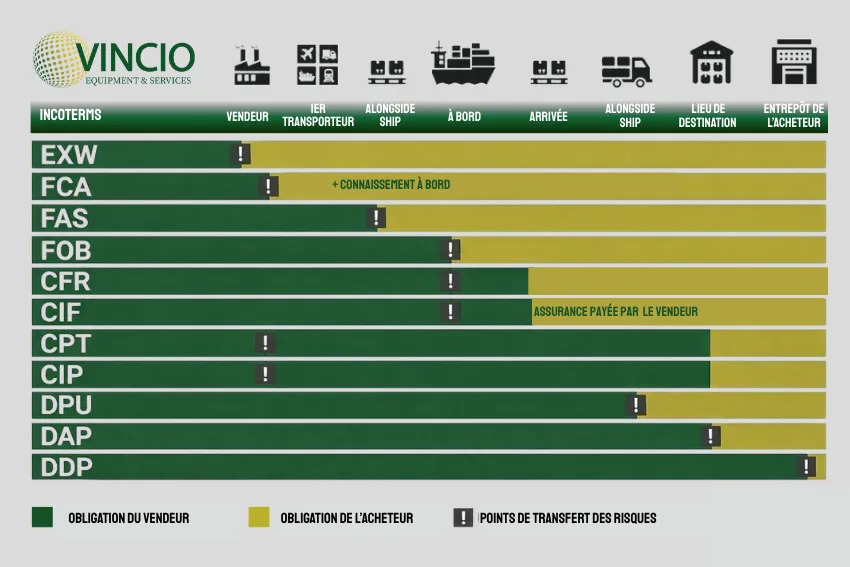
In many equipment procurement projects, the choice of an Incoterm is still too often treated as a simple logistical detail, sometimes decided quickly or by habit. Yet behind these few letters lie far greater stakes than one might assume. An Incoterm does not merely define who arranges or pays for transport it structures the allocation of responsibilities, risks, and costs throughout the entire project. When poorly chosen, it can weaken an otherwise technically well-managed operation and unnecessarily expose the parties involved to complex and sometimes contentious situations.
When poorly chosen, it can weaken an otherwise technically well-managed operation and unnecessarily expose the parties involved to complex and sometimes contentious situations.
What Incoterms Really Govern
Incoterms provide a precise framework for international trade. They define, in particular, the exact moment when risk is transferred from seller to buyer, who is responsible for customs formalities, insurance obligations, and the management of main carriage and ancillary logistics operations.
In practical terms, they establish the boundary between what remains under one party’s control and what no longer does. This boundary is often misunderstood, yet its consequences become very real when logistical disruptions or delays occur.
Commonly Overlooked Risk Factors
One frequent mistake is to consider certain Incoterms as universal or suitable for all situations. In reality, an Incoterm that works perfectly for a standard shipment may be entirely inappropriate when dealing with technical equipment, specific destinations, or strict time constraints. Project context is always decisive.
Moreover, the transfer of risk is not always intuitive. Buyers may discover that risk has shifted well before the equipment is physically received sometimes while they have no control over transportation, packaging, or handling conditions. This gap is a common source of disputes and misunderstandings.
Some Incoterms can also give a false sense of security. Terms that appear “comfortable” may conceal indirect costs, limit the ability to intervene when issues arise, or blur responsibilities among multiple parties. Apparent simplicity does not necessarily equate to better protection.
Finally, choosing an Incoterm unilaterally, without a shared analysis, often shifts risk rather than managing it. Over time, this can weaken the commercial relationship and complicate the handling of unforeseen events.
The Value of a Thoughtful, Supported Choice
The right Incoterm is neither one that transfers all constraints to the other party nor one that overprotects a single stakeholder. It is one that is consistent with the operational reality of the project.
A well-informed choice takes into account the true level of logistical control, the technical nature of the equipment, regulatory constraints, and the ability to respond effectively in the event of an incident. This is why such a decision should be discussed and, when appropriate, supported by a partner with a comprehensive technical and operational perspective.
Conclusion
Incoterms are not a mere contractual formality. They are a powerful tool for risk management. Taking the time to analyze them properly and seeking expert support can prevent costly and often avoidable difficulties, and ensure the long-term security of your projects.