


Types of Shipping Containers: Complete Guide and Uses
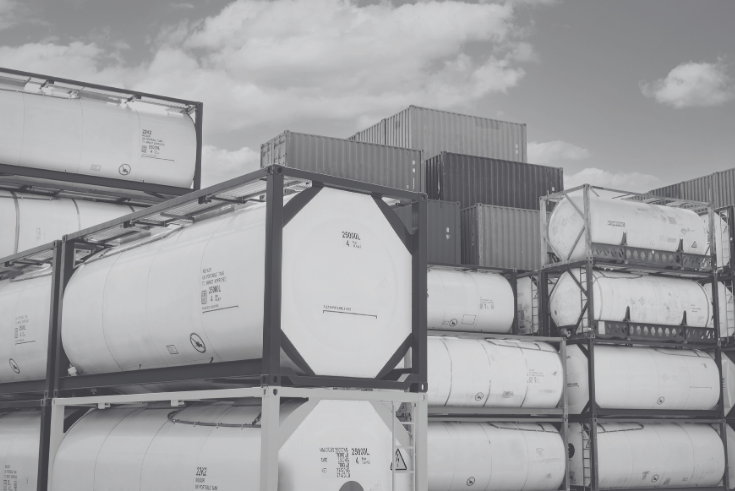
Maritime transport plays a key role in international trade. According to the International Maritime Organization, more than 80% of global goods are transported by sea.
At the heart of this logistics system is the shipping containera standardized unit that enables efficient transportation of goods over long distances.
However, there are several types of containers,each designed to meet specific needs: general cargo, refrigerated goods, oversized cargo, or liquid transport.
In this guide, discover the 14 main types of shipping containers and their uses in international logistics. dans la logistique internationale.
Why Are There Different Types of Shipping Containers?
Not all goods have the same characteristics. Some require temperature controlothers must be loaded from the top,while certain cargo exceeds standard dimensions.
Different types of containers therefore allow to:
- de protect goods
- d’optimize transportation
- de facilitate handling
- d’improve logistics safety
Choosing the right container is therefore a crucial step in any supply chain.
The 14 Main Types of Shipping Containers
1. Dry Van Container (Standard Container)
The Dry Van is the most commonly used container in maritime transport.
Features
- sealed and enclosed container
- robust steel structure
- rear-end doors
Uses
It is used to transport general cargo such as:
- boxes
- pallets
- industrial goods
- consumer products
The Dry Van represent the majority of containers used in international trade..
Common Dry Van Container Sizes
Dry containers come in several standard sizes. The most common are:
20-foot Container (20 ft)
The 20-foot Container (20 ft) is one of the most widely used formats in international transport.
It is particularly suited for:
- heavy cargo
- standard pallets
- compact shipments
Thanks to its strength and load capacity, it is widely used in maritime and intermodal transport.
40-foot Container (40 ft)
The 40-foot Container (40 ft) Offers greater storage volume than the 20 ft container.
ideal for :
- bulky goods
- large international shipments
- cost optimization per cubic meter
10-foot Container
The 10-foot Container Less common in maritime transport.
Main uses:
- storage
- construction sites
Its compact size makes it ideal for confined spaces.
2. High Cube Container
The High Cube shipping container is similar to a standard container but with additional height..
Advantages
- increased volume capacity
- ideal for bulky goods
Uses
It is used to transport:
- furniture
- industrial equipment
- lightweight but voluminous cargo
High Cube Container (40 HC)
The High Cube Container, also called 40 HC, is a taller version of the 40 ft container.
Benefits :
- approximately 30 cm extra height
- higher loading capacity
- improved volume optimization
Today, 20 ft and 40 ft High Cube containers are among the most commonly used worldwide.
3. Refrigerated Container (Reefer)
The refrigerated Container, also called Reeferis designed for transporting perishable goods.
Features
- integrated refrigeration system
- temperature control
- thermal insulation
Uses
Reefer shipping containers are used to transport:
- fruits and vegetables
- meat and fish
- pharmaceutical products
- frozen products
They ensure cold chain integrity throughout transport..
4. Open Top Container
The Open Top Container is a container with a removable roof.
Features
- top loading access
- tarpaulin cover
- similar structure to Dry Van
Uses
Ideal for cargo that must be loaded by crane from above.
5. Flat Rack Container
The Flat Rack is an open sides container shipping with collapsible end walls.
Uses
It is used to transport:
- industrial machinery
- heavy equipment
- oversized cargo
6. Platform Container
The platform container is a flat base without side walls
Uses
It is designed to transport very heavy or bulky cargo, such as:
- industrial machinery
- steel structures
- out-of-gauge equipment
7. Half-Height Container
The Half-Height Container has a reduced-height container.
Uses
Primarily for heavy bulk cargo:
- coal
- ores
- stones
Ventilated Container
The Ventilated Container is equipped with air vents for circulation.
Uses
ideal for agricultural products such as:
- coffee
- cocoa
- moisture-sensitive goods
ISO Tank Container
The IsoTank is a tank container used for liquids.
Uses
It can be used to transport:
- chemicals
- food-grade liquids
- liquefied gases
10. Double Door Container
The double Door Container has doors at both ends.
Advantages
- easier loading
- quick access to cargo
Open Side Container
The Full side opening. has a full side opening.
Advantages
- full cargo access
- simplified loading
12. Side Door Container
This type of container is equipped with doors along the side.
Uses
Allows fast loading with forklifts..
13. Car Carrier Container
Designed for transporting multiple vehicles.
Uses
It is used for the maritime transport of:
- cars
- motorcycles
- utility vehicles
Tank Container
The Tank Container is used for transporting liquid cargo.
Uses
- fuels
- chemicals
- industrial liquids
How to Choose the Right Container Type ?
Several criteria must be considered:
Nature of the goods: liquid, solid, perishable, or hazardous
Cargo dimensions: some goods require open or specialized containers
Transport conditions: temperature, humidity, safety
Logistics constraints: crane loading, side access, or specific handling
L’accompagnement de Vincio Equipment & Services.
At Vincio Equipment & Serviceswe support logistics, industrial, and international trade professionals with their container solutions.
Thanks to our network of specialized partners, we provide most container types la majorité des types de conteneurs utilisés dans le transport maritimeused in maritime transport:
- for sale
- for rental
- or for freight operations
We offer the most commonly used models, including:
- shipping containers 20 ft Dry Van
- shipping containers 40 ft
- shipping containers 40 ft High Cube
- specialized containers (Reefer, Flat Rack, Open Top, ISO Tank, etc.)
This diversity allows us to meet the specific needs of each logistics project,whether for international transport, storage, or industrial applications.
Our goal is to provide reliable, tailored, and cost-effective solutions to support your logistics operations.
Conclusion
Shipping containers are essential to international freight transport. Thanks to the wide range of available models, transport can be adapted to the specific constraints of each type of cargo.
Choosing the right container helps secure goods, optimize logistics costs, and improve overall transport efficiency..