


Transport Truck Types and Dimensions: A Complete Guide
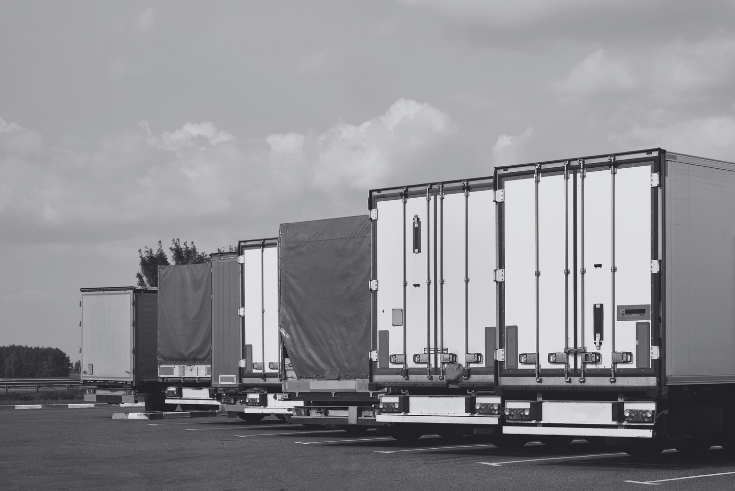
Road freight transport relies on a wide variety of vehicles, each designed to meet specific logistics needs. Depending on the nature, weight, and volume of the cargo, choosing the right truck is a decisive step in optimizing costs and ensuring transport safety.
Whether you're shipping standard pallets, industrial machinery, or oversized goods, understanding the available truck types and their technical specifications allows you to anticipate your logistics needs and avoid unpleasant surprises.
In this guide, discover the main types of trucks used in road transport, their standard dimensions, and the cases requiring special transport.
Why Do Different Types of Trucks Exist?
Not all goods present the same transport constraints. Some require top-loading, others must be protected from weather conditions, and some exceed standard road gauges.
Choosing the right type of truck helps to:
- secure the goods during transport
- optimize the number of vehicles required
- reduce logistics costs
- comply with current road regulations
Here are the main types of trucks used in freight transport.
1. The Curtainsider Truck (Tautliner)
The curtainsider, also known as a tautliner, is one of the most versatile vehicles in road transport.
Features
- semi-open structure with sliding side curtains
- loading possible from the sides, rear, or top
- suitable for the majority of general cargo
Uses
It is used to transport pallets, cartons, industrial products, or construction materials. Its loading flexibility makes it the most commonly used vehicle in Europe also referred to as a tautliner truck in international freight terminology.
2. The Flatbed Truck
The flatbed truck has no walls or roof, providing full access to the loading surface.
Uses
It is particularly suited for:
- oversized goods
- heavy industrial equipment
- metal structures
- loads requiring a crane or lifting equipment
3. The Box Truck (Dry Van)
The box truck, or dry van, is a fully enclosed vehicle, offering maximum protection against weather conditions and theft.
Uses
It is favored for transporting:
- moisture-sensitive products
- valuable goods
- consumer products
4. The Refrigerated Truck
Equipped with an integrated refrigeration system, this truck maintains a controlled temperature throughout the journey.
Uses
It is essential for transporting:
- perishable food products
- pharmaceutical products
- goods requiring a cold chain
5. The Tipper Truck (Dump Truck)
The tipper truck has a tilting body allowing for quick unloading.
Uses
It is mainly used to transport bulk materials such as sand, rubble, or construction site materials.
6. The Tanker Truck
The tanker truck is designed to transport liquid or gaseous goods.
Uses
It allows for the transport of fuels, chemical products, or food-grade liquids, under strict safety conditions.
7. The Low Loader (Equipment Trailer)
This type of truck is specifically designed to transport machinery and construction equipment.
Uses
It is used to move:
- excavators
- mobile cranes
- agricultural or industrial equipment
Stackability: An Often Decisive Criterion
Beyond the type of truck, one factor can fundamentally change the organization of transport: the stackability of the goods.
What Is Stackable Cargo?
Cargo is considered stackable when it can be stacked without risk of damage or instability.
Why This Criterion Matters
- if the cargo is stackable, it can be loaded on multiple levels and fit into a single vehicle
- si elle n’est pas gerbable, un second véhicule peut devenir nécessaire
This simple parameter can significantly change the number of trucks required, with a direct impact on total transport cost.
Weight: An Equally Critical Constraint
Volume is not the only limiting factor. Weight also plays a key role in logistics planning.
Regulatory Loads to Know
- GVW (Gross Vehicle Weight): maximum authorized weight for the vehicle alone
- GCW (Gross Combination Weight): maximum authorized weight for the loaded tractor-trailer combination
Axle Weight Distribution
Load distribution is strictly regulated by road transport law. Improper distribution can result in vehicle immobilization during an inspection.
For a complete breakdown of interior and exterior dimensions by vehicle type (semi-trailer, 19T rigid truck, 26T rigid truck, light commercial vehicle), see our dedicated guide: The Different Truck Dimensions, the Complete Guide by Tonnage.
Special Transport: When Standards Are Not Enough
Some goods cannot be transported under standard road freight conditions.
Exceptional Convoys
When dimensions or weight exceed regulatory gauges, transport via exceptional convoy becomes necessary. This involves:
- specific administrative authorizations
- a pre-validated route
- sometimes an escort or enhanced signage
Goods Concerned
- non-stackable or fragile cargo
- dangerous goods (ADR/hazmat)
- oversized industrial equipment
Anticipating these constraints in advance helps avoid delays and unexpected costs related to improper transport mode assessment.
How to Choose the Right Type of Truck?
Several criteria should be considered before selecting a vehicle:
- the nature of the goods (solid, liquid, perishable, hazardous)
- the dimensions and weight of the cargo
- the required transport conditions (temperature, protection, security)
- loading constraints (side, top, crane)
Vincio Equipment & Services Support
At Vincio Equipment & Services, we support professionals in industry, construction, and international trade in organizing their road transport.
Through our network of specialized partners, we are able to provide the most suitable vehicle for each type of cargo, whether for standard transport, oversized loading, or exceptional convoy.
Our goal is to anticipate these technical parameters in advance, in order to offer reliable, secure, and cost-optimized logistics solutions.
Conclusion
Choosing the right type of truck is not just a matter of available volume. Dimensions, weight, stackability, and regulatory constraints are all parameters to anticipate in order to secure transport and optimize logistics costs.
A proper assessment of these criteria in advance helps avoid unforeseen issues and ensures delivery under the best possible conditions.